

As you begin to architect your 2026 strategic goals, a seismic shift is occurring in the digital landscape that demands your immediate attention. The way your customers discover information and make decisions is fundamentally changing, ...
 Remington Begg
·
·
6 min read
Remington Begg
·
·
6 min read
As you begin to architect your 2026 strategic goals, a seismic shift is occurring in the digital landscape that demands your immediate attention. The way your customers discover information and make decisions is fundamentally changing, driven by the rapid integration of Artificial Intelligence into search - it's more than just AI Overviews in Google.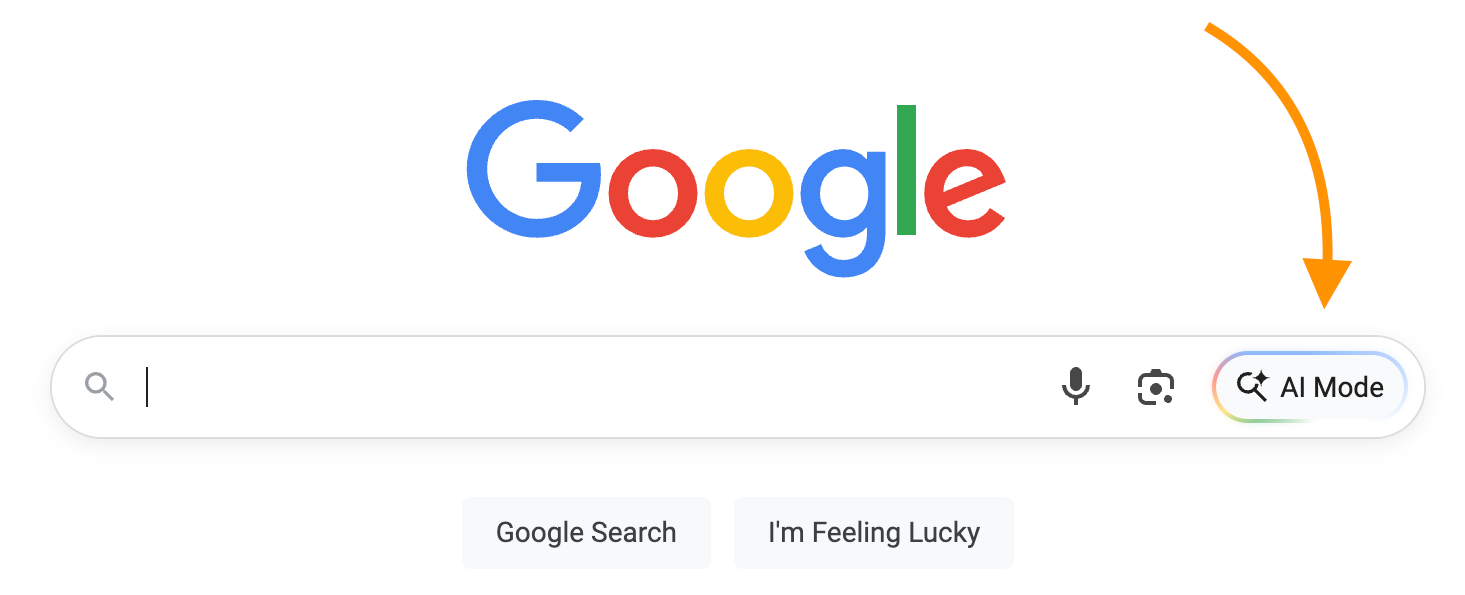 Google's "AI Mode" isn't a future concept; it's here now, and it's already rewriting the rules of marketing effectiveness. Marketing managers need to take note and C-suite executives need to be open to shifts in conversation. This isn't just another trend—it's a critical inflection point that requires a complete overhaul of how you approach your website, your content, and your metrics.
The End of Search As We Know It
For over 20 years, we've all been trained to "speak Google." We shortened our questions into keywords and learned to game the system to find the desired results. Marketers, in turn, built entire strategies around long-tail keywords. That era is officially ending, or going to be unrecognizable in 2 years from now.
AI-powered search encourages natural, conversational questions. The user looking for "plumbers Fort Myers" is now asking, "Can you recommend plumbers near me that are available today" This isn't a subtle change; it's a complete transformation in user behavior.
Google's AI Mode is designed to provide a comprehensive, "wholesome" answer directly on the results page, often eliminating the need for multiple clicks. It synthesizes information from dozens of web pages, reviews, and even your Google Business Profile to deliver a single, consolidated response.
The implication is stark: if your information isn't part of that initial AI-generated answer, you may never get a click.
A Website Built for AI and Human's Intent
The battle for visibility is no longer just about keywords; it's about context and intent. AI is connecting the dots in ways traditional search never could. It understands that a "pool installer" is a contractor, and it will prioritize results that reflect that contextual understanding, regardless of your keyword dominance. In the near future, the "memory" from that LLM will influence the information from your website that it surfaces too.
To succeed in this new environment, your website and digital presence must evolve. Here's where to focus:

1. Create Content for the Final Click
Your content strategy must shift from broad, top-of-funnel topics to hyper-specific information that addresses user intent at every stage of the buyer's journey. This means getting as close to the "contract signing" moment as possible.
-
Be Radically Transparent: The AI prioritizes clarity. Websites that openly share pricing, service details, and what a customer can expect are being rewarded. If your competitor lists their prices and you don't, the AI sees them as a more complete and helpful answer.
-
Focus on Intent Clusters: Think beyond topic clusters. Your content needs to anticipate the user's next question. If they're searching for your service, the AI assumes they'll also want to know about cost, process, and what others think of your work. Your website must provide all of this supporting content in an easily accessible format.
2. Amplify Your Social Proof
In an AI-driven world, consensus is currency. The LLMs are designed to validate information across multiple sources. It's no longer enough for you to say you're great; you need others to say it, too.
-
Google Business Profile is Non-Negotiable: For local searches, AI Mode is heavily prioritizing Google Places listings over website links. When was the last time you updated your profile, responded to every review, and utilized all its features? This is now a primary marketing channel you should be aware of.
-
Syndicate and Aggregate Reviews: Your online reputation across all platforms—Yelp, G2, industry-specific sites—matters more than ever. An unanswered negative review from 2020 could now actively harm your visibility in AI-generated results.
3. Embrace "Answer Engine Optimization"
Your website needs to be technically structured to feed AI agents the precise information they need, all without muddying up the humans experience. This is the new SEO, or "Answer Engine Optimization."
-
Structured Data is Essential: Using schema markup (like JSON-LD) to explicitly define your services, products, prices, and locations is no longer a "nice-to-have." It's a direct way to tell the AI what content on your page is most important, cutting through the noise of design elements and marketing copy.
-
Rebuild for Structure: Many existing websites and CMS platforms are not built for this new reality. You may need to consider a foundational rebuild to ensure your site is structured for AI accessibility, not just human readability.
- Community & Social Connection: Social media used to be used to drive clicks and traffic to your website. Now, LLM's can connect the dots and sentiment regarding your company or products without the need for a link. That Instagram post or video (which is indexable by Google now), that TikTok video, that subreddit about your product. All of that is going to roll up into your presence when it comes to AI Mode getting the right answer.
Rethinking the Metrics of Success
If traffic is your primary KPI, you are measuring for a world that is quickly being disrupted. AI overviews will inevitably reduce the volume of clicks to your website. Continuing to rely on traffic as a measure of success will lead to flawed conclusions and missed opportunities.
Your new metrics for 2026 must include:
-
Reach (cross platforms): How many eyeballs is your brand getting in front of? Zero Click Content is today's reality. You need to measure the reach, and the audience that your content is getting in front of.
-
Cost Per Eyeball: As the role of paid ads in this new interface evolves, understanding the true cost to get your brand in front of a qualified prospect will be paramount.
- Conversion Rate: The traffic that does come through should be significantly more qualified. These users have already received the top-level information from the AI tools. Your focus must be on converting this high-intent traffic and finding ways to engage and convert.
- Revenue: Ultimately, all marketing efforts must be tied back to the bottom line. But attribution is not always going to be a straight line.
Your First Steps into the AI Era
This shift can feel overwhelming, but the first-mover advantage is immense. The playing field is being leveled, offering a rare opportunity to capture market share.
-
Become a User: Open an incognito window and start using Google's AI Mode. Search for the terms you currently rank for and see what comes up. Do the same thing in Perplexity, or ask a question in ChatGPT too.
-
Analyze the Results: Take screenshots. Click the supporting links. Who is the AI citing? What information is it prioritizing? This is your new competitive analysis.
-
Start the Conversation Now: The metrics you use to measure marketing today will not be the same in 2026. You must begin discussing this shift with your leadership team to manage expectations and secure the resources needed to adapt.
The future of discovery is here. By rethinking your approach to content, structure, and measurement now, you can ensure you're not just prepared for 2026, but positioned to dominate it.
